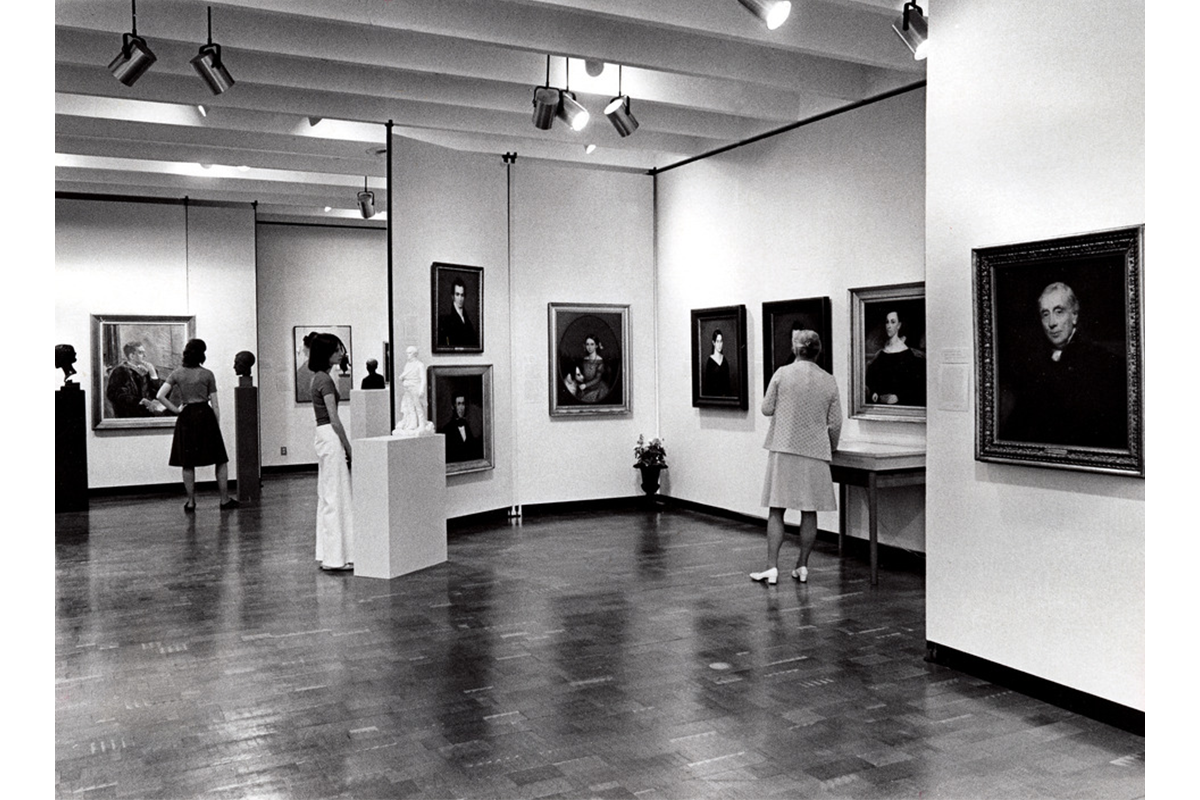
Art Museum, interior. 1976. Buildings records (CA-MS-00104), Smith College Archives, Smith College Special Collections, Northampton, Massachusetts. https://compass.fivecolleges.edu/islandora/object/InMagic_Record_4902
The Smith College Museum of Art: A Timeline
Z Stevens ‘25 is a graduate student at the Simmons University School of Library and Information Science. They have worked at SCMA in various capacities since 2023 and are currently the Collections Assistant.
1875: Smith College welcomes its first class of fourteen students.
1879: First purchases for the College Hall art gallery begin. The first recorded purchase is made in February, and Thomas Eakins’ In Grandmother’s Time, SCMA’s first accessioned object, is purchased in May.
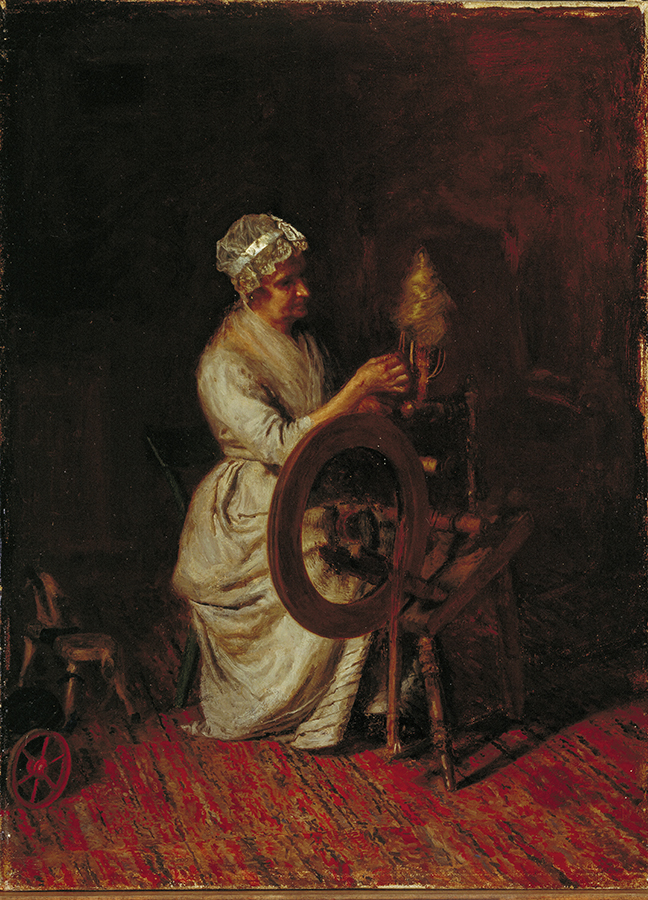
Thomas Eakins (American, 1844-1916), In Grandmother's Time, 1893, oil on canvas, stretcher: 16 x 12 in. Purchased. SC 1879.1
1881: Smith College raises money to build a separate art building; local business man Winthrop Hillyer offers to fund the project himself.
1882: The Art Gallery is built.
1883: Hillyer Art Gallery is dedicated after Winthrop Hillyer’s estate establishes the college’s first art acquisition fund.
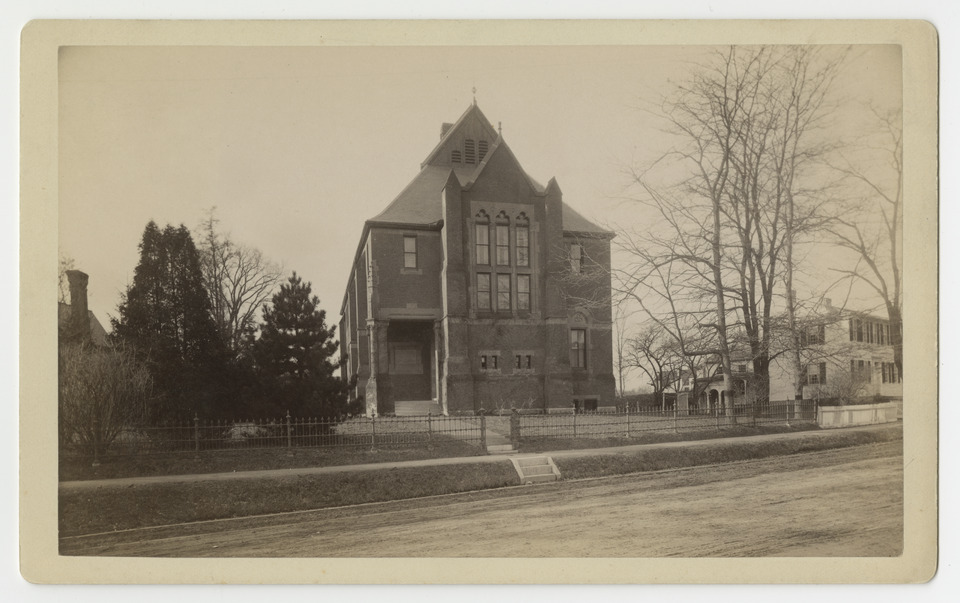
Hillyer Art Gallery, ca. 1886. Photograph by Knowlton Brothers, Buildings records (CA-MS-00104), Smith College Archives, Smith College Special Collections, Northampton, Massachusetts. https://compass.fivecolleges.edu/islandora/object/InMagic_Record_560
1886: Artist Dwight W. Tryon joins the faculty and consults on acquisitions for the art gallery.
1906: Alfred Vance Churchill joins the art faculty, taking charge of the art collection with Professor Tryon.
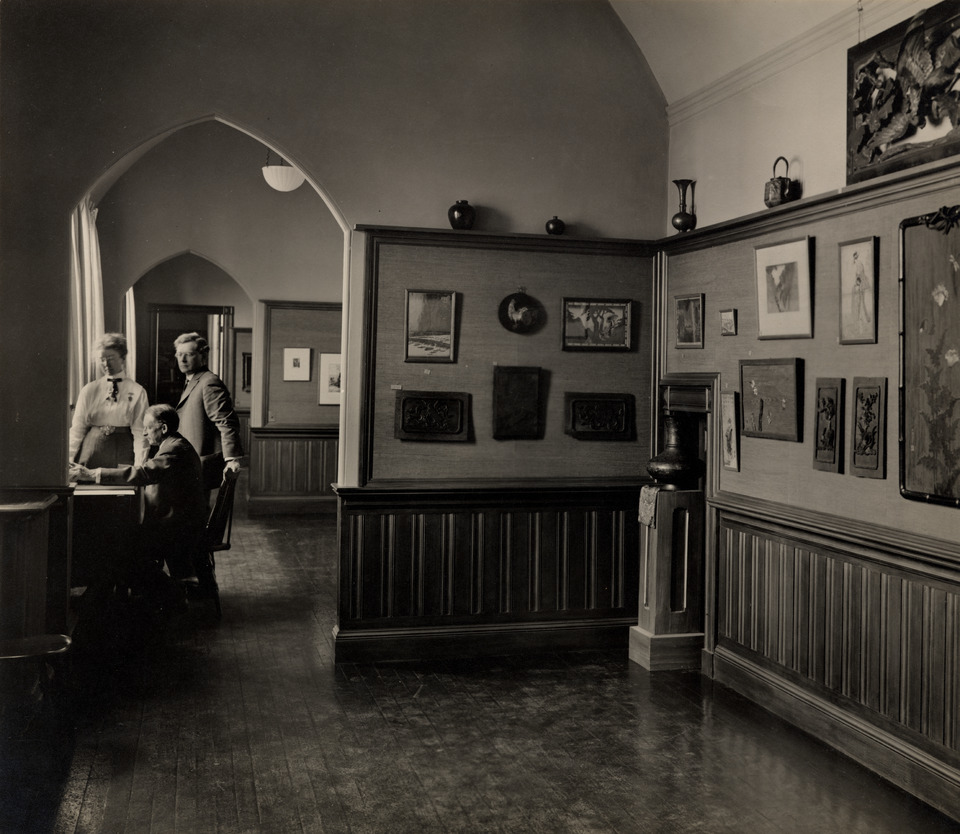
Interior of Hillyer Art gallery in 1910. Beulah Strong, Dwight Tyron (seated), and Alfred Vance Churchill, professors of art and museum staff. Buildings records (CA-MS-00104), Smith College Archives, Smith College Special Collections, Northampton, Massachusetts. https://compass.fivecolleges.edu/islandora/object/InMagic_Record_6302
1917: Industrialist Charles Lang Freer, friend to Professor Tryon, gifts the museum its first Asian art objects.
1920: The Smith College Museum of Art is formally established with Alfred Vance Churchill as its first director. The museum staff includes Churchill as director and sole curator, his assistant, and a secretary.
1923: Professor Tryon retires with the promise to fund the construction of a new gallery upon his death.
1925: Professor Tryon dies; design and construction of a new gallery begins.
1926: Tryon Art Gallery opens; all of the collections housed in the Hillyer Gallery move to the new building.
1926: The Smith College Board of Trustees votes to assign all art owned by the college to the collection of the Smith College Museum of Art.
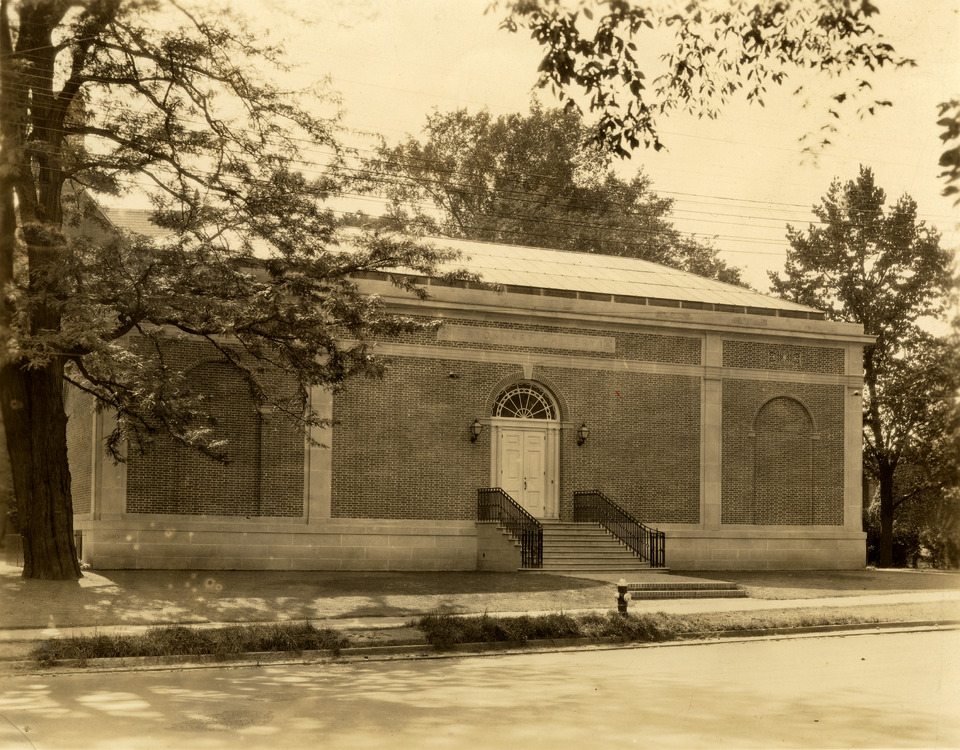
Tryon Gallery exterior. n.d, Buildings records (CA-MS-00104), Smith College Archives, Smith College Special Collections, Northampton, Massachusetts. https://compass.fivecolleges.edu/islandora/object/InMagic_Record_5761
1929: Churchill purchases Gustave Courbet’s Preparation of the Bride, later renamed Preparation of the Dead Girl upon further research.
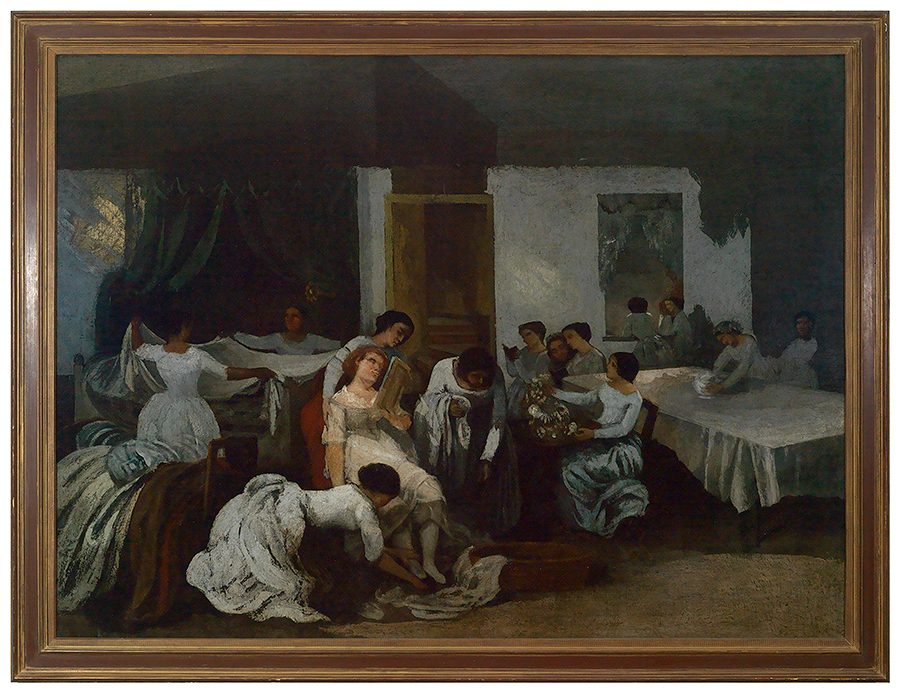
Gustave Courbet (French, 1819-1877), Preparation of the Dead Girl, circa 1850-1855, oil on canvas, stretcher: 77 x 99 in. Purchased with the Drayton Hillyer Fund. SC 1929.1
1932: President of Smith College William Neilson forces Churchill into retirement. In an attempt to professionalize SCMA, he hires Jere Abbott from the recently established Museum of Modern Art to take over as director.
1932: Abbott’s first purchase is Pablo Picasso’s cubist painting Table, Guitar and Bottle. The painting causes an outcry from students and their families.
1933: Abbott purchases the first seven photographs to enter the collection, including works by George Platt Lynes, Luke Swank, and László Moholy-Nagy.
1934: George Seurat’s Woman with a Monkey, a study for A Sunday on the Island of La Grande Jatte is purchased.
1939: The Luba Ceremonial Axe (Kibiki), the first major African object to enter the collection, is purchased.
1940: Charles Sheeler’s painting Rolling Power is purchased.
1943: Rufino Tamayo’s mural Nature and the Artist; the Work of Art and the Observer is commissioned and undertaken in the Hillyer Art Library in honor of Elizabeth Cutter Morrow, class of 1896 and significant contributor to the college.
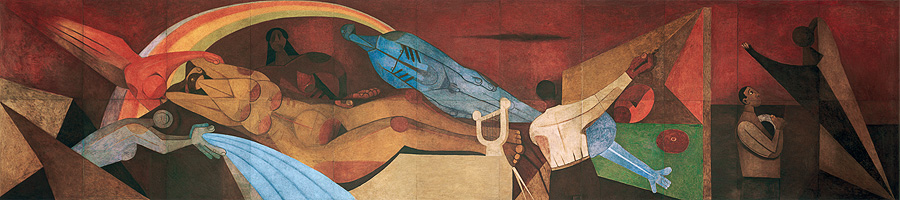
Rufino Tamayo (Mexican, 1899-1991), Nature and the Artist; the Work of Art and the Observer, 1943, fresco remounted on muslin on twenty-two hollow-core Masonite panels, overall: 9 5/8 x 42 3/4 ft. Commissioned in honor of Mrs. Dwight W. Morrow (Elizabeth Cutter, class of 1896). SC 1943.8.1
1946: Jere Abbott leaves SCMA for what was intended to be a short health-related leave, later resigning entirely.
1946: Abbott is replaced by Acting Director Frederick Hartt.
1947: Hartt begins deaccessioning of early purchases of American art in a campaign to raise funding for a new addition to the museum building.
1947: Hartt departs, Edgar Schenck becomes the director.
1947-1949: Many early purchases of American art from the SCMA collection are sold off in a mass deaccessioning campaign.
1949: Schenck departs, Henry-Russell Hitchcock becomes director of SCMA.
1949: Mary Bartlett Cowdrey joins staff as assistant curator (1949), curator (1950-51), then Assistant Director (1951-1955). She was likely the first person to hold these positions at SCMA.
1951: Hitchcock and alumna Bernice McIlhenny Wintersteen, class of 1925, form the Museum Visiting Committee, a board of advisors largely made up of Smith alumnae.
1953: Edwin Romanzo Elmer’s Mourning Picture is purchased.
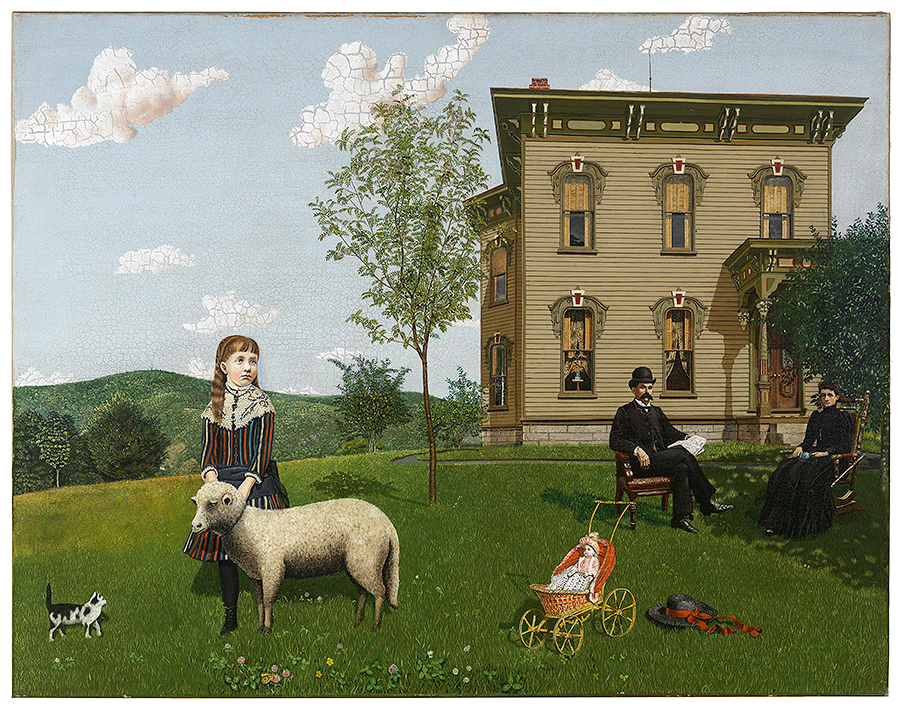
Edwin Romanzo Elmer (American, 1850 - 1923), Mourning Picture, 1890, oil on canvas, stretcher: 27 15/16 x 36 in. Purchased. SC 1953.129
1953: View of Northampton from the Dome of the Hospital is acquired as an undated, anonymous piece of American art.
1955: Hitchcock leaves the SCMA and is replaced by Robert Owen Parks as director.
1955: Parks eliminates Mary Bartlett Cowdrey’s position, returning the museum to the practice of having the director act as the sole curator.
1956: Major donors Adeline Flint Wing, class of 1898, and Caroline Roberta Wing, class of 1896, gift SCMA the painting Cathedral at Rouen (La Cour d'Albane) by Claude Monet.
1958: The painting Mrs. Nesbitt as Circe by Joshua Reynolds is given to SCMA as the gift of the Morrow family.
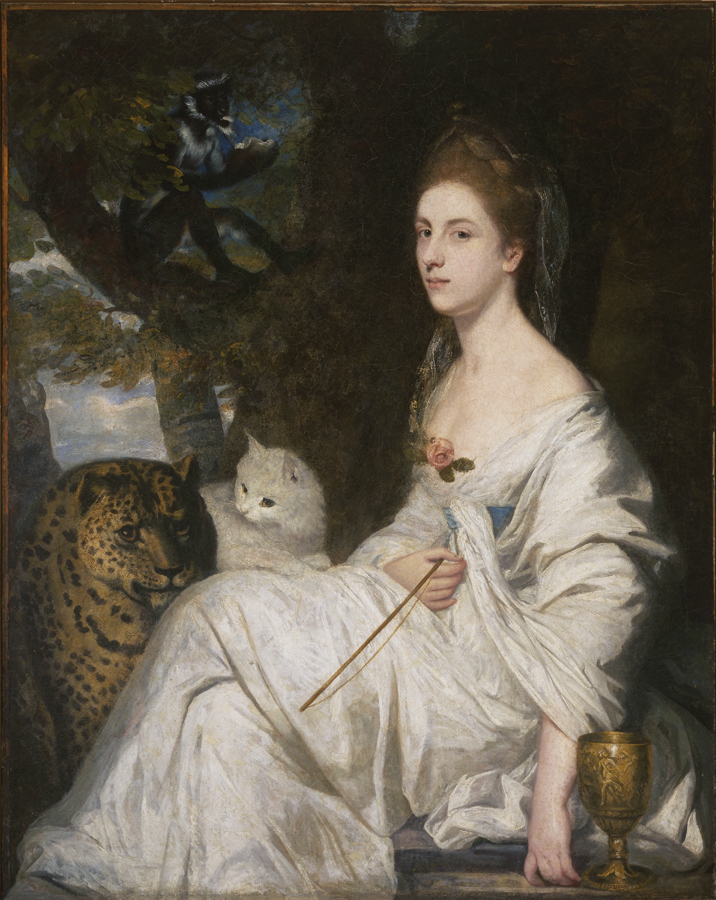
Joshua Reynolds (English, 1723 - 1792), Mrs. Nesbitt as Circe, 1781, oil on canvas, stretcher: 49 1/4 x 39 1/2 in. Gift of Dwight W. Morrow Jr., Anne Morrow Lindbergh, class of 1928 and Constance Morrow Morgan, class of 1935. SC 1958.4
1961: Parks resigns; visiting lecturer in art Hamish Miles briefly becomes acting director.
1961: Miles leaves; PhD candidate Patricia Milne-Henderson becomes acting assistant director.
1962: Milne-Henderson returns to the U.K.; Charles S. Chetham becomes director of SCMA.
1969: Frank Stella gifts his painting Damascus Gate to SCMA.
1970: The buildings comprising SCMA are closed and the collection is put into offsite storage as demolition for a new Fine Arts complex begins.
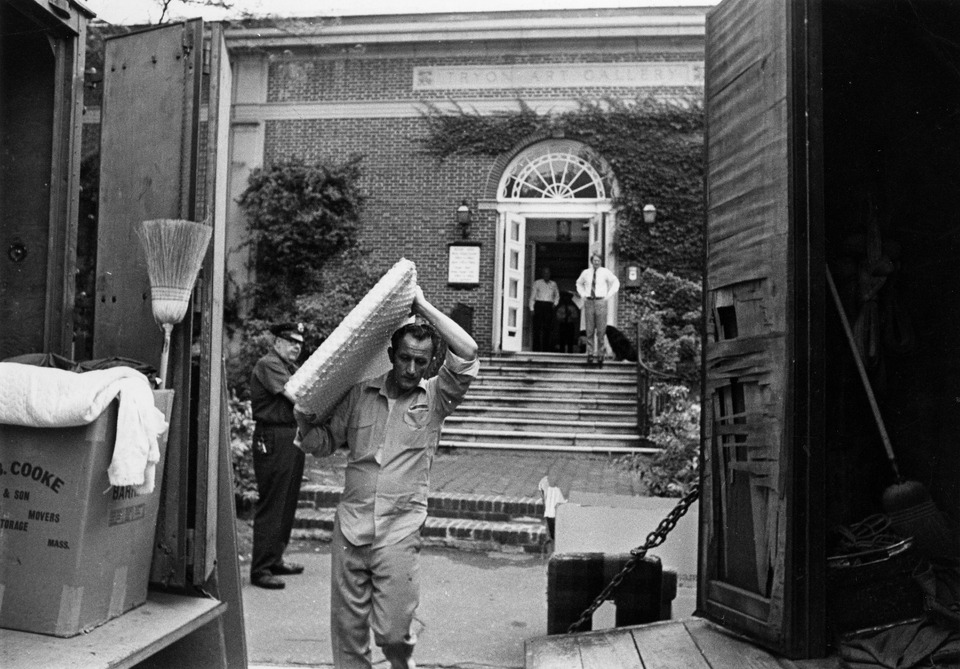
Workers removing art from Tryon Gallery. 1970, Buildings records (CA-MS-00104), Smith College Archives, Smith College Special Collections, Northampton, Massachusetts. https://compass.fivecolleges.edu/islandora/object/InMagic_Record_5769
1973: New Fine Arts Center opens, housing the redesigned SCMA, Hillyer Art Library, and art department.
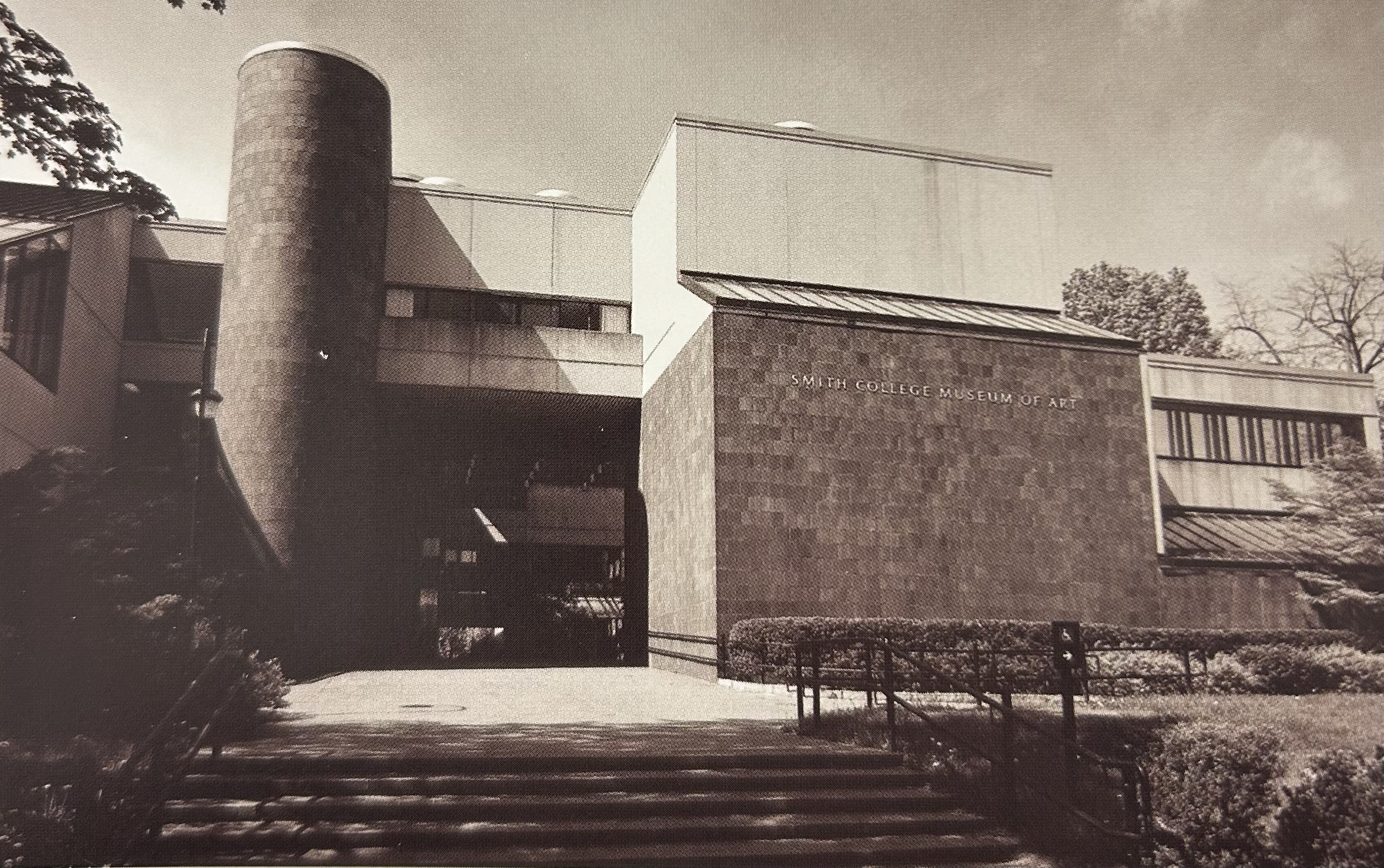
The Fine Arts Center, n.d. , Buildings records (CA-MS-00104), Smith College Archives, Smith College Special Collections, Northampton, Massachusetts.
1974: Betsy Burns Jones, class of 1947, is hired from the Museum of Modern Art and becomes the new Curator of Paintings.
1977-1978: Jones identifies View of Northampton from the Dome of the Hospital as having been painted by Thomas Charles Farrer on a visit to Northampton in 1865.
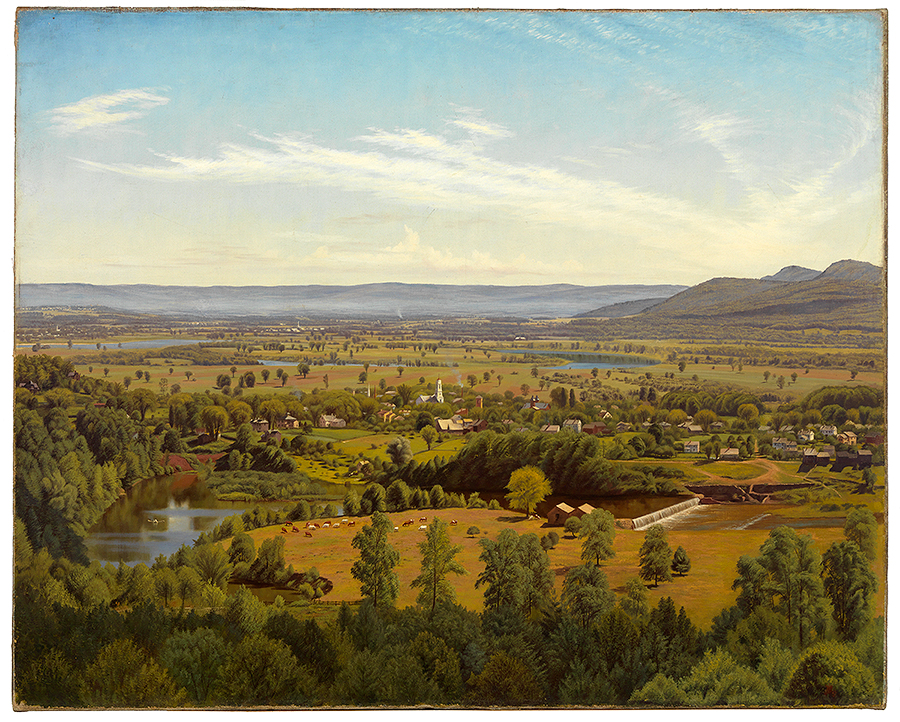
Thomas Charles Farrer (British, 1839 - 1891), View of Northampton from the Dome of the Hospital, 1865, oil on canvas, stretcher: 71.4375 x 91.44 cm. Purchased. SC 1953.96
1988: Chetham retires after twenty six years of leadership; Edward Nygren takes over as director.
1990: Nygren departs and Charles Parkhurst is installed as SCMA’s acting director.
1991: SCMA first receives its American Alliance of Museums accreditation.
1991: Nancy Rich is hired as the first Curator of Education, paving the way for the development of the current Education Department.
1992: Suzannah Fabing is appointed as the new director of SCMA. She is the first woman to officially hold the position.
1998: Nam June Paik’s Internet Dweller: btjm.twelve. jhgd is purchased.
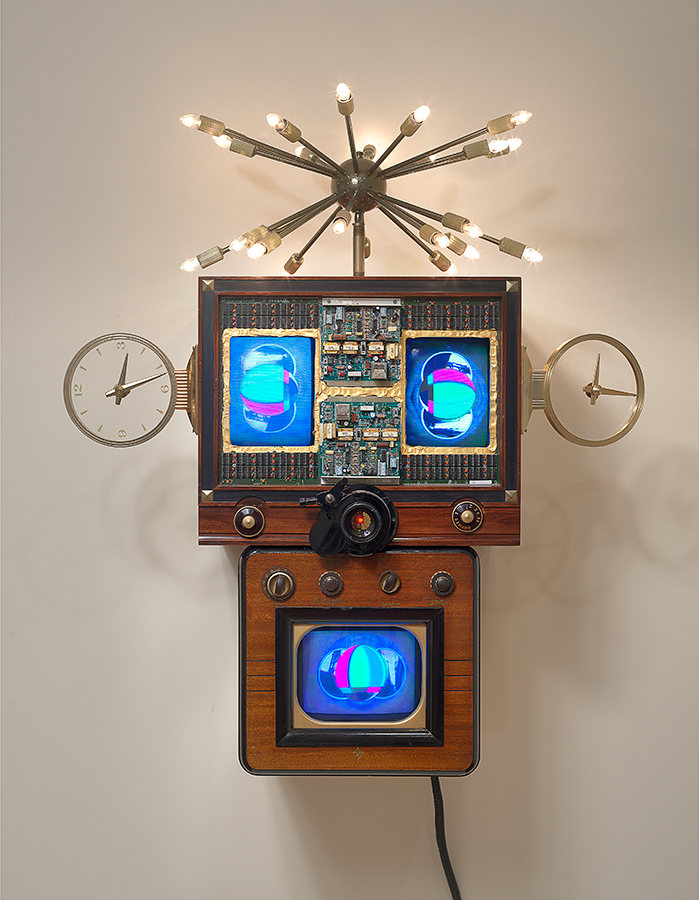
Nam June Paik (American, 1932-2006); Internet Dweller: btjm.twelve. jhgd; 1997; two vintage TV cabinets, three KEC 9 in. televisions model 9BND, two clocks, circuit boards, lens, fabric, and electric light fixture; overall: 47 x 41 x 28 in. Purchased with the Janet Wright Ketcham, class of 1953, Acquisition Fund and the Beatrice Oenslager Chace, class of 1928, Fund. SC 1998.18
1999-2000: The Fine Arts Center is slated for remodeling and SCMA is closed. Two exhibitions of works from the permanent collection are sent off as touring shows across the U.S., while a third tours Europe.
2001: The Baroque painting Adoration of the Shepherds by Erasmus Quellinus II is purchased.
2003: Brown Fine Arts Center reopens with the renovated Hillyer Hall housing the art department and Hillyer Art Library, and Tryon Hall housing the newly expanded SCMA.
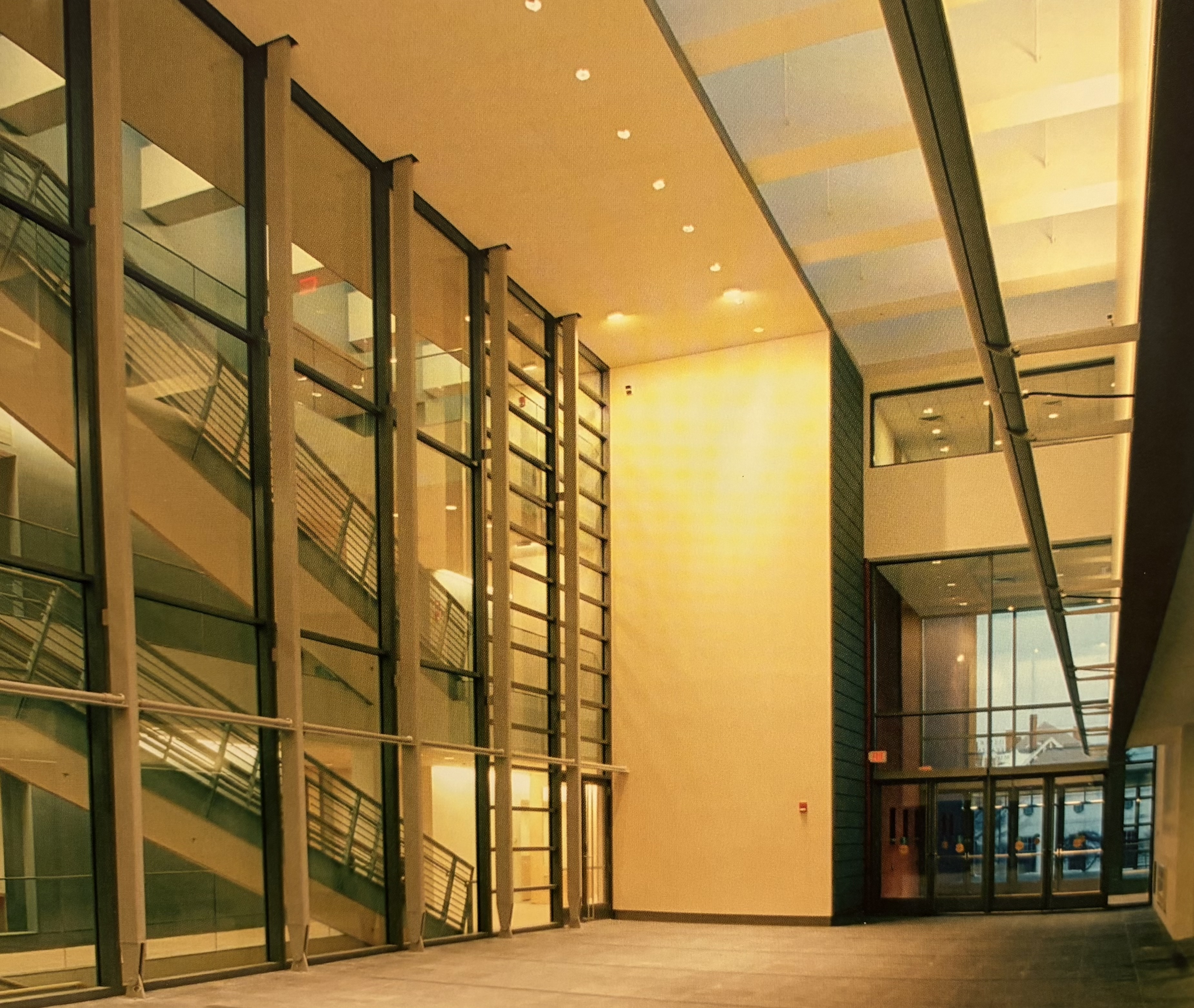
Brown Fine Arts Center atrium. Photo by Jeff Goldberg, 2003. From Image and Word: Art and Art History at Smith College.
2005: Fabing retires; Jessica Nicoll, class of 1983, assumes position of SCMA Director and Chief Curator. Nicoll is the first Smith alum to hold the position.
2005-2006: Bartholomaeus Bruyn the elder’s Coronation of the Virgin altarpiece is purchased.
2010: George Bellows’ Pennsylvania Excavation is gifted to SCMA by Mary Gordon Roberts, class of 1960.
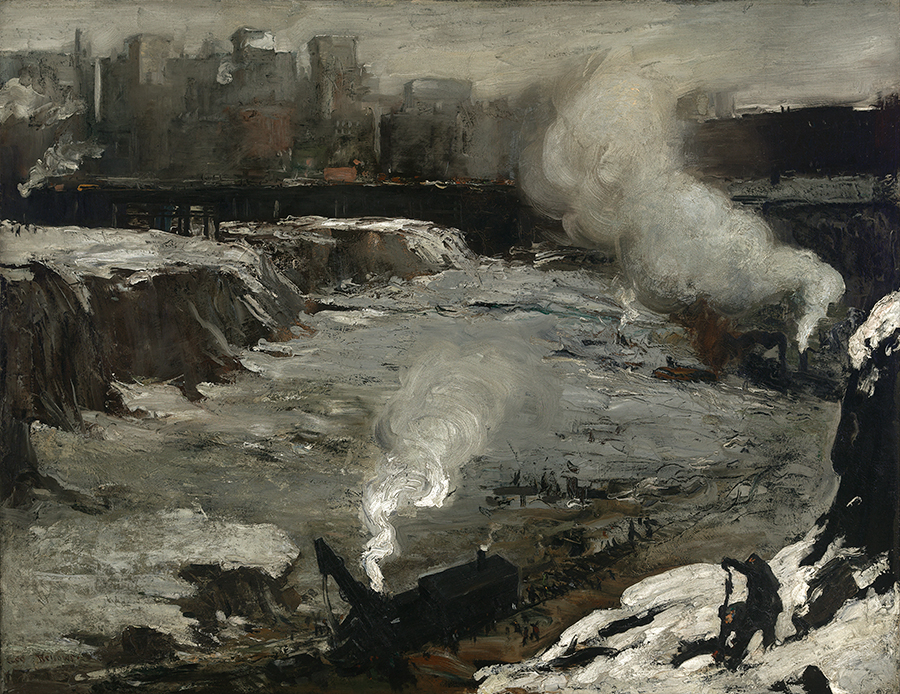
George Wesley Bellows (American, 1882-1925), Pennsylvania Excavation, 1907, oil on canvas, stretcher: 34 in x 44 in. Gift of Mary Gordon Roberts, class of 1960, in honor of her 50th reunion. SC 2010.11
2015: Yao Wu becomes the inaugural Jane Chace Carroll Curator of Asian Art.
2017: Emma Chubb is hired as the inaugural Charlotte Feng Ford ’83 Curator of Contemporary Art.
2020-2021: The Covid-19 pandemic significantly impacts the in-person operations of Smith College and SCMA.
2021: SCMA reopens to the Smith College community at a limited capacity.
2021: In August, SCMA reopens to the public at full capacity.
2021-2022: The Cunningham Center for Study of Prints, Drawings and Photographs is renovated to expand storage and improve access.
2023: SCMA becomes free for all visitors.
2023: SCMA’s third floor galleries close for renovations and roof repair.
2024: The third floor galleries reopen with a new exhibition from the permanent collection.
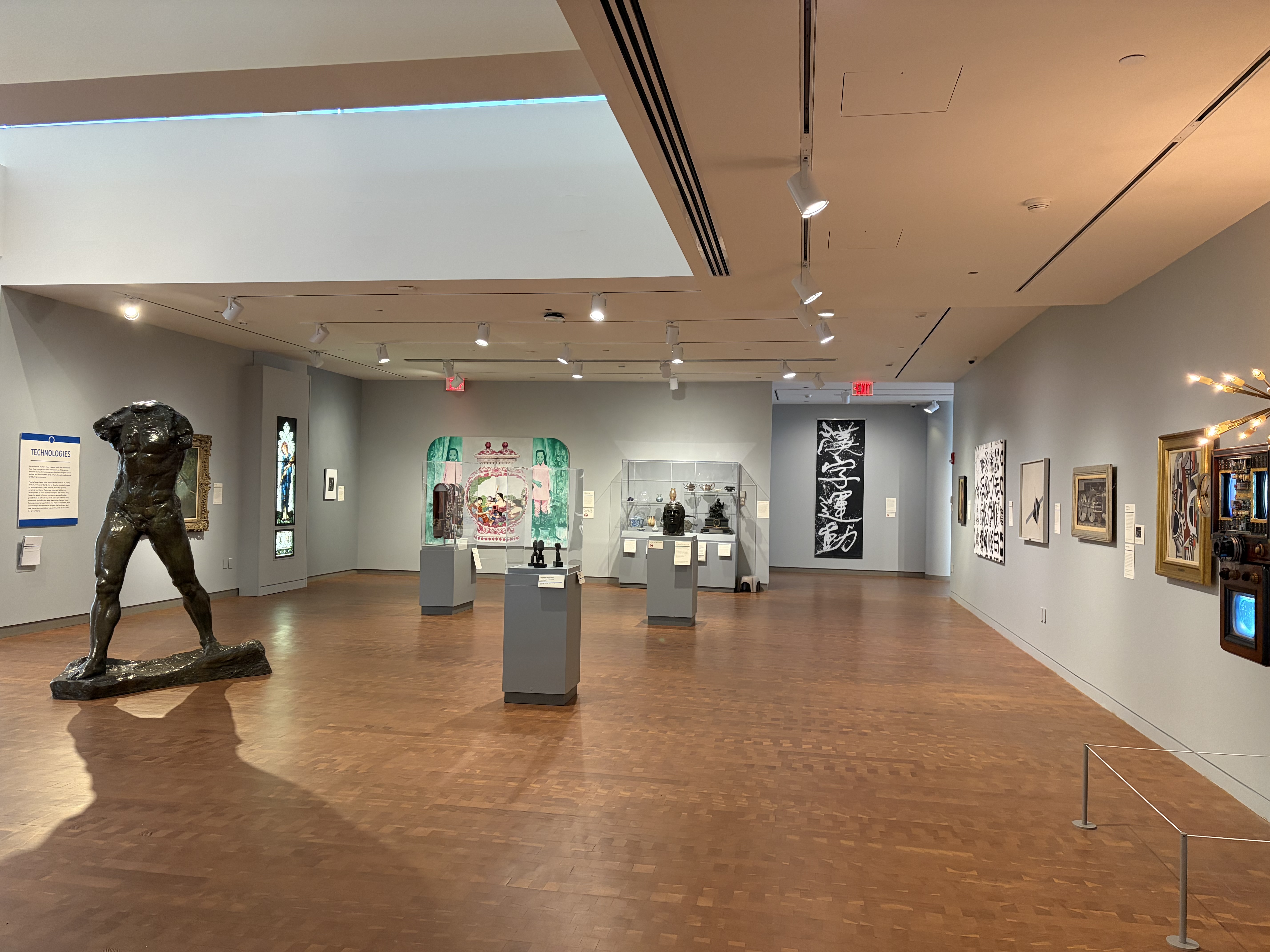
Worlds in Process: Art from the SCMA Collection. Installed winter 2023-2024. Photo by Z Stevens, 2026.
We shall see what comes next!
Many thanks to Aprile Gallant and Louise Krieger for their help with the facts. This post was also informed by Image and Word: Art and Art History at Smith College, 2003. Other information sourced from materials from SCMA and the College Archives at Smith College Special Collections.