Don't mind if I do
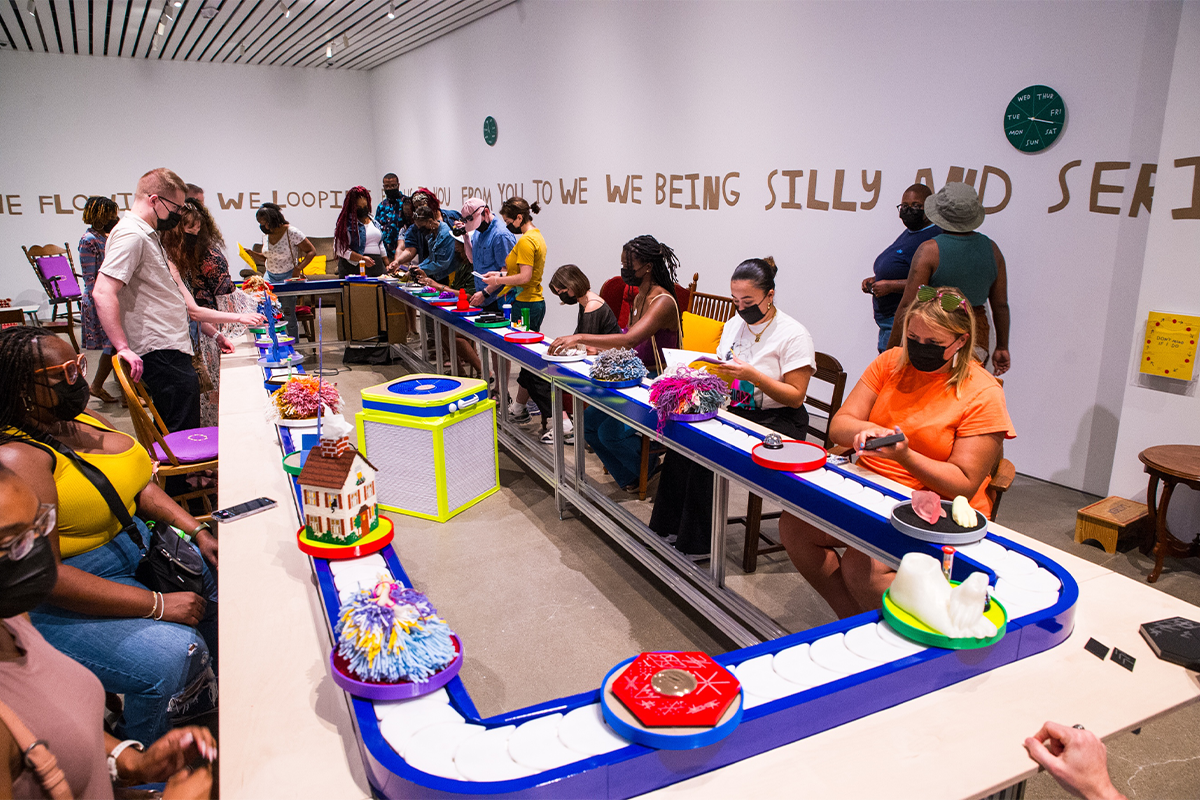
Finnegan Shannon is an artist whose mischievous works challenge traditional museum practices and etiquette. For Don’t mind if I do, Shannon brings alive their longtime fantasy for an exhibition that meets their access needs. “I’m disabled,” they say, “and I need to sit. I’ve been dreaming about an exhibition where instead of having to move from artwork to artwork, I could sit somewhere comfortable and have the artwork come to me.”
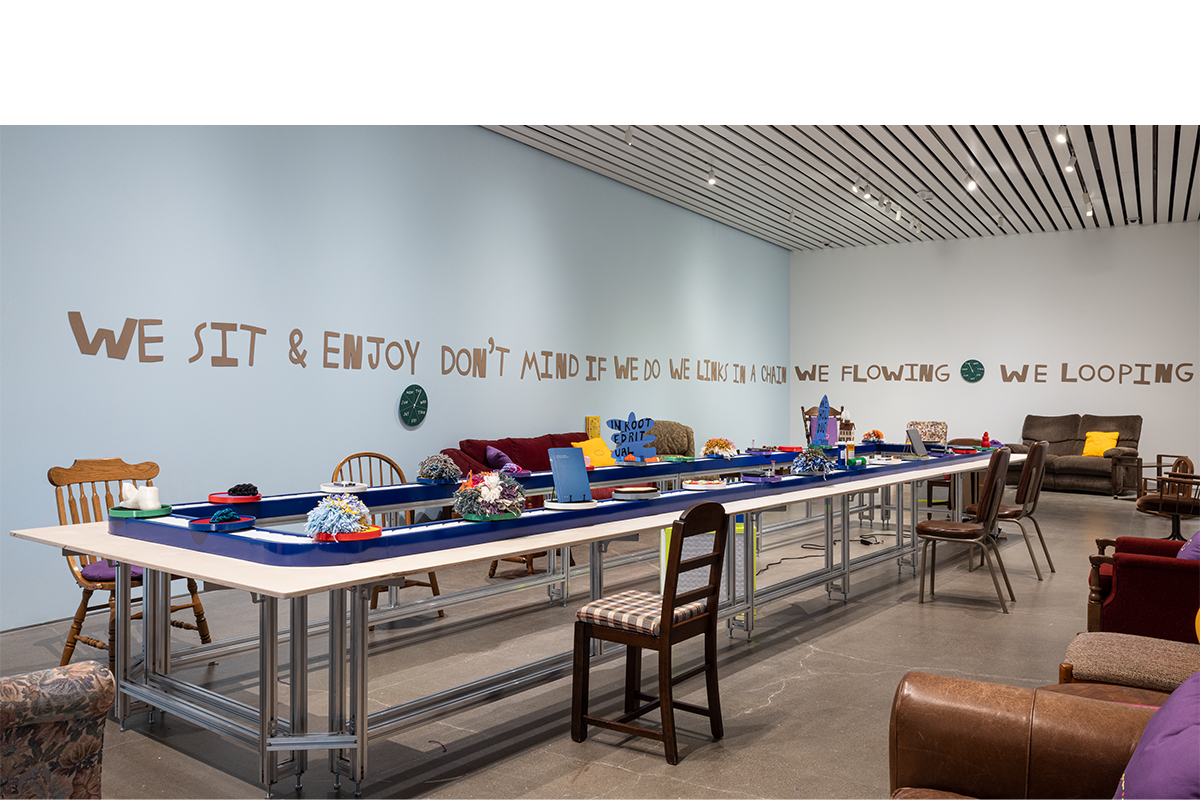
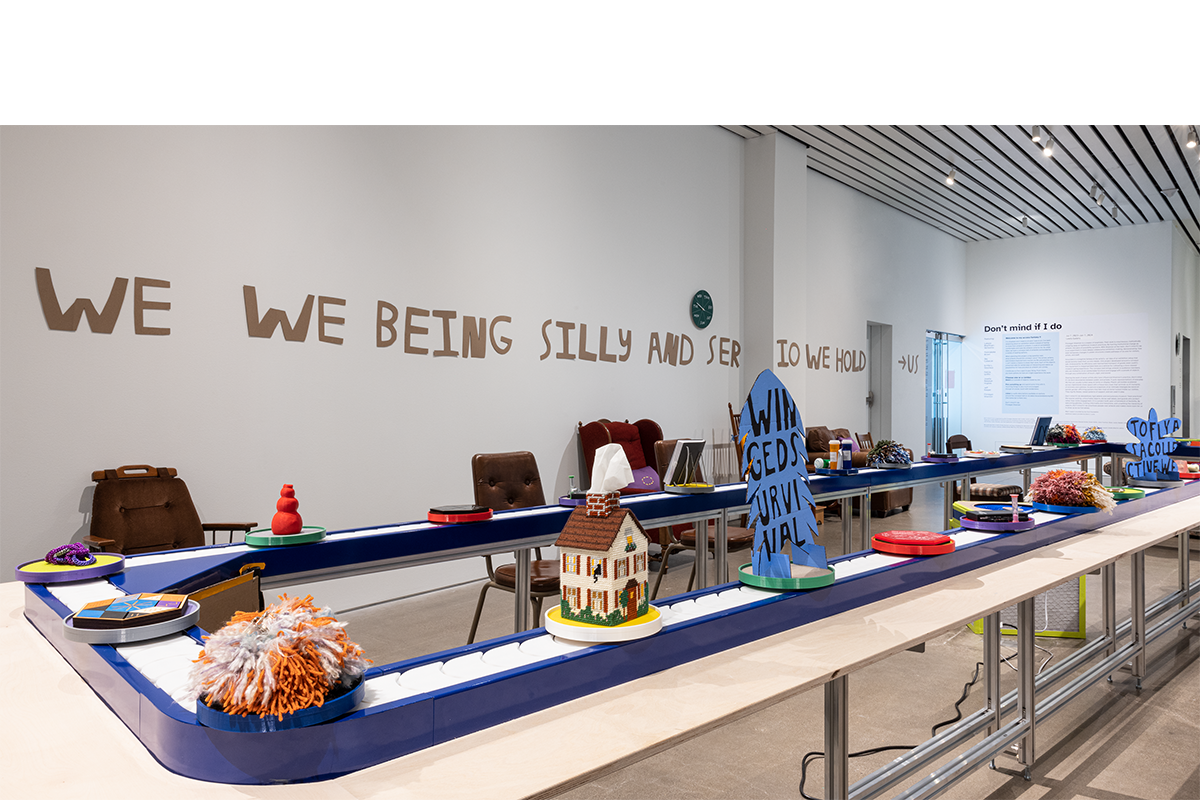
Don’t mind if I do is a collaborative experiment demonstrating how temporary changes in power structures create pathways of access for visitors, artists, and staff. Anchored by a conveyor belt that brings artworks to visitors who are invited to sit around comfortable furniture and engage with the objects, the exhibition features artworks by a selection of artists who have influenced Shannon’s practice. The paraded objects, including plastic pill bottles, tissue box covers, and gender-affirming packers, signify illness, systems of support, and play within everyday life.
Embraced for its efficiency and mechanized transport of goods, the conveyor belt is reappropriated as a vehicle for cultivating a more relaxed museum-going experience. It welcomes informality, messiness, and unsettling the hierarchy of objects.
This web text was written by Denny Mwaura for Gallery 400 at the University of Illinois at Chicago based on texts by Finnegan Shannon and Lauren Leving and is used with permission.
Artists
Lukaza Branfman-Verissimo, Pelenakeke Brown, Sky Cubacub, Emilie L. Gossiaux, Felicia Griffin, Joselia Rebekah Hughes, Jeff Kasper and Finnegan Shannon.
Curator
Lauren Leving
Support
This exhibition is made possible at SCMA by the Charlotte Frank Rabb, class of 1935,
Fund; the Judith Plesser Targan, class of 1953, Fund; and the Ann Weinbaum
Solomon, class of 1959, Fund. Generous support is also provided by Art Bridges
Foundation’s Access for All program.
Presenting Partners
Don’t mind if I do originated at the Museum of Contemporary Art Cleveland (July 7, 2023–January 7, 2024) with generous support provided by the Ford Foundation. Additional touring venues include: University Library at California State University, Sacramento (September 10–November 27, 2024) and Gallery 400 at the University of Illinois at Chicago (September 23–December 13, 2025).

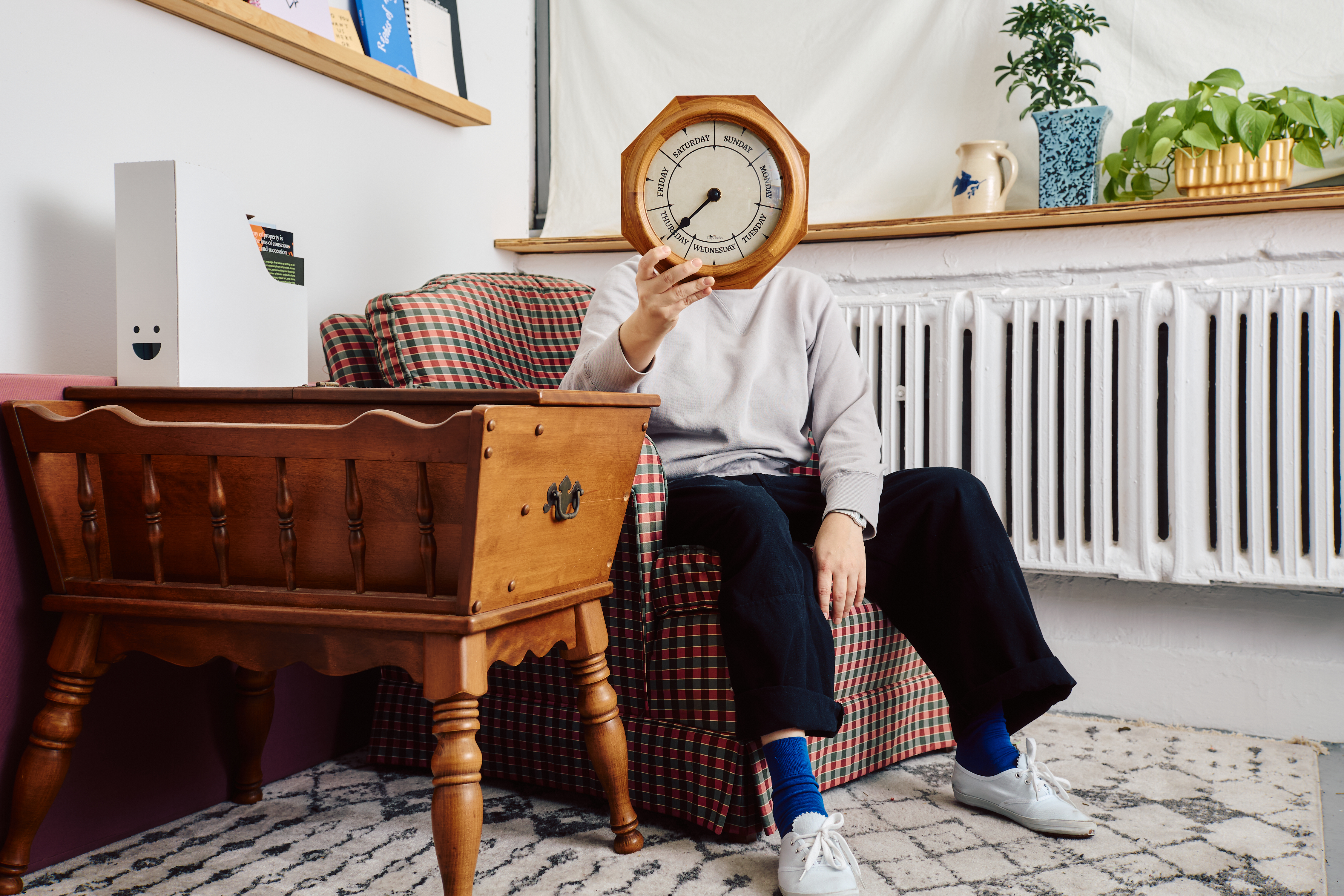
Finnegan Shannon (they/them) is a project-based artist who experiments with forms of access that intervene in ableist structures with humor, earnestness, rage, and delight. Recent work includes Anti-Stairs Club Lounge, an ongoing project that gathers people who share an aversion to stairs; Alt-Text as Poetry, a collaboration with Bojana Coklyat that explores the expressive potential of image description; and Do You Want Us Here or Not, a series of benches and cushions designed for exhibition spaces. Shannon has realized projects with Banff Centre, Queens Museum, the High Line, MMK Frankfurt, the Museum of Contemporary Art Denver, and Nook Gallery. Their work has been supported by a 2018 Wynn Newhouse Award, a 2019 residency at Eyebeam, a 2020 grant from Art Matters Foundation, and a 2022 grant from the Canada Council for the Arts, and has been written about in Art in America, BOMB Magazine, The Believer, and The New York Times. They live and work in Brooklyn, NY.
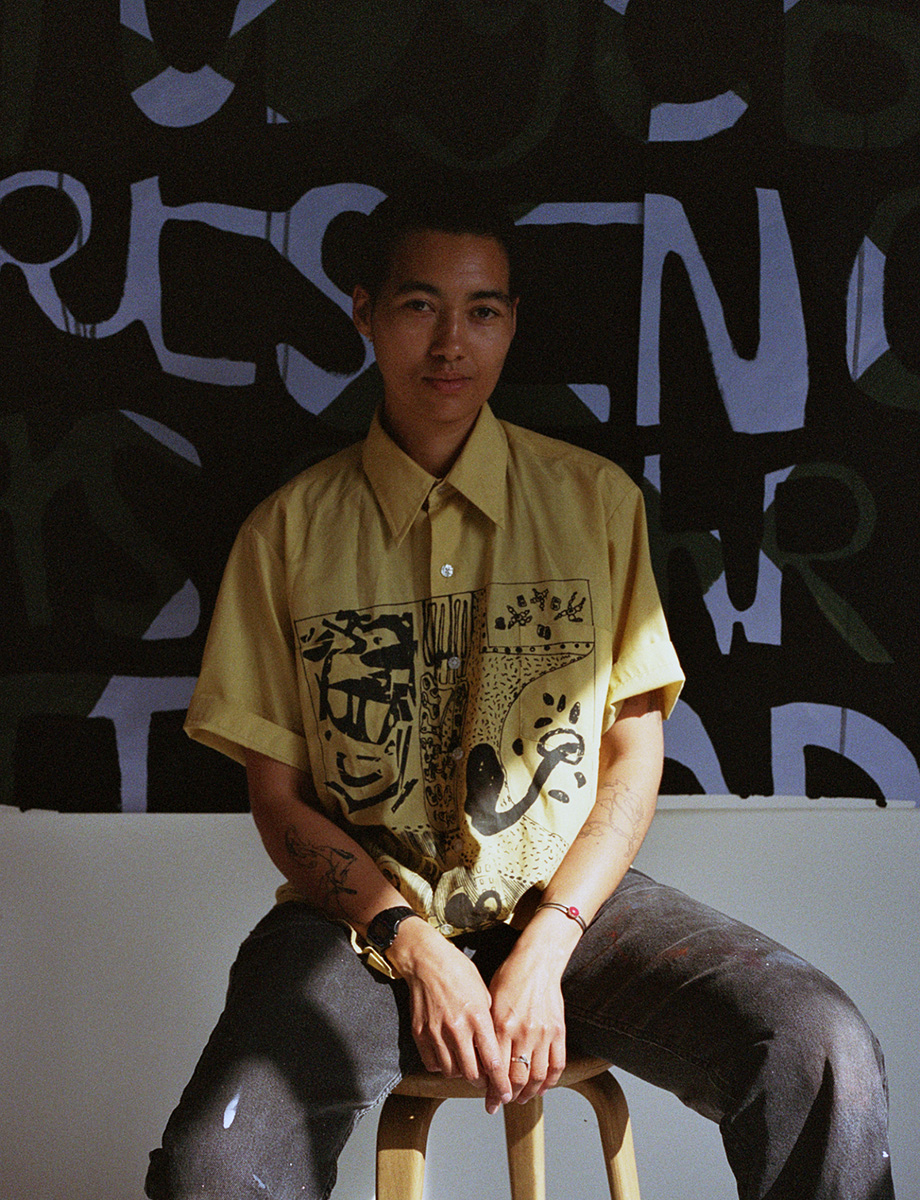
Lukaza Branfman-Verissimo (they/them/Lukaza) is an artist, activist, educator, storyteller, cultural worker, and person of multitudes. Through a practice based in the printed multiple, community-based work, painting, performance and installation building, they invite the viewer to recall and share their own lived narratives, offering power and weight to the creation of a larger dialogue around the telling of B.I.Q.T.P.O.C. (Black, Indigenous, Queer, Trans, People of color) stories. Branfman-Verissimo has had solo shows at SEPTEMBER Gallery, Deli Gallery, Roll Up Projects, Printed Matter Inc., and STNDRD Projects. Their work has been included in exhibitions and performances at Konsthall C, EFA Project Space, Leslie Lohman Museum, Yerba Buena Center for the Arts, and L’Internationale Online, amongst others. They have been awarded residencies and fellowships at The University of New Mexico, Black Space Residency, Kala Art Center, Women’s Studio Workshop, and ACRE Residency. Branfman-Verissimo’s artist books and printed editions have been published by Endless Editions, Childish Books, Press Press and Printed Matter Inc., and are in permanent collections at The Metropolitan Museum of Art, California College of the Arts Printmaking Archive, University of California Santa Cruz Library, New York University Special Collections, and San Francisco Museum of Art Library.
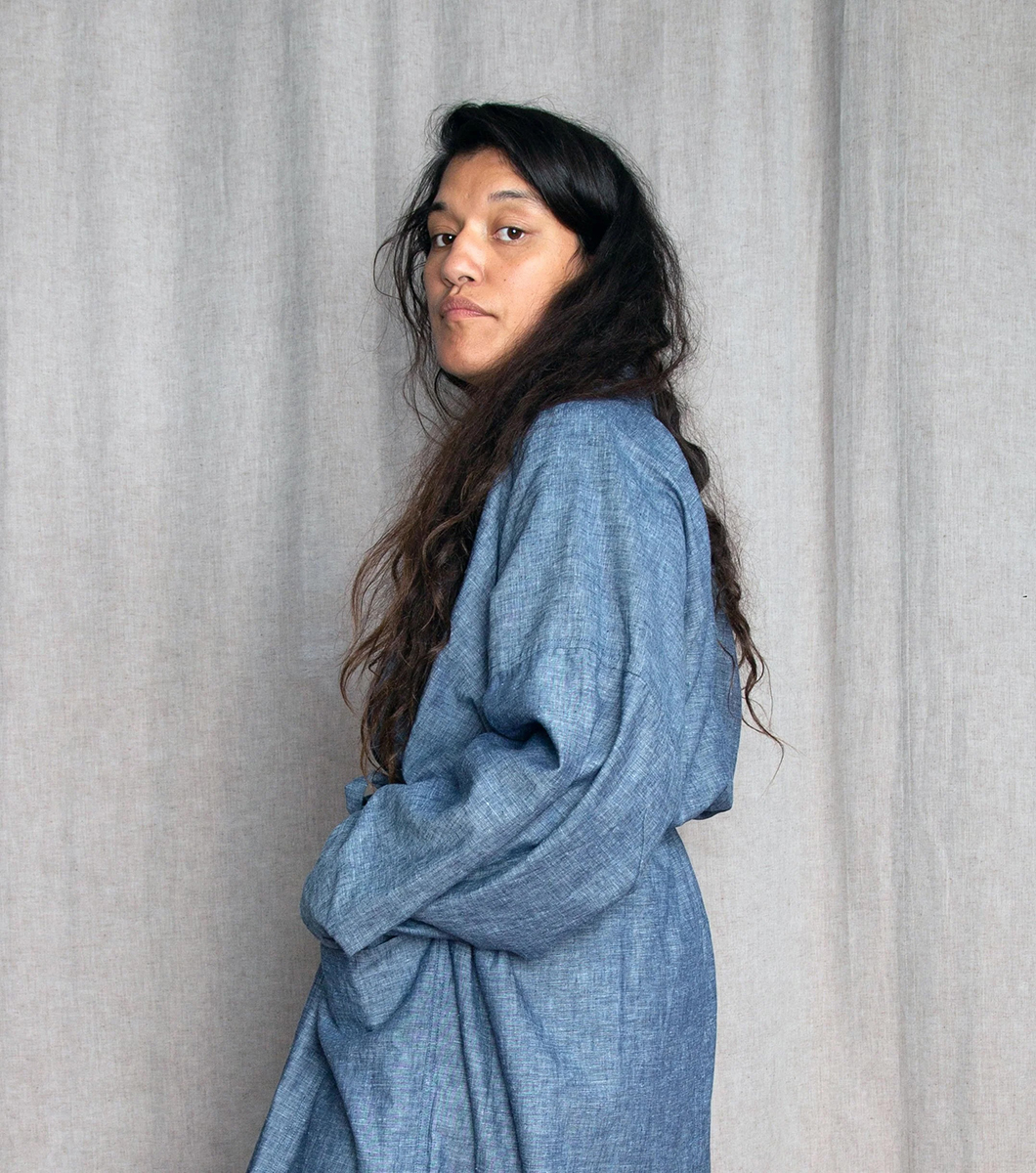
Pelenakeke Brown (she/her) is a queer, crip, indigenous artist and writer. Brown's practice explores the intersections between disability theory and Sāmoan concepts. Her work investigates sites of knowledge(s), and she uses technology, writing, poetry, and performance to explore these ideas. Brown has worked with The Metropolitan Museum of Art, Gibney Dance Center, The New York Library for the Performing Arts, Gibney Dance Center, The Goethe Institute, and other institutions globally. Selected residencies include Eyebeam, The Laundromat Project, and Dance/NYC. She has performed and exhibited her work in the US, UK and Germany. Her non-fiction creative work has been published in The Hawai‘i Review, Apogee Journal, and the Movement Research Performance Journal. Her work has been featured in Art in America and she was recognized in 2020 with a Creative New Zealand Pacific Toa award.
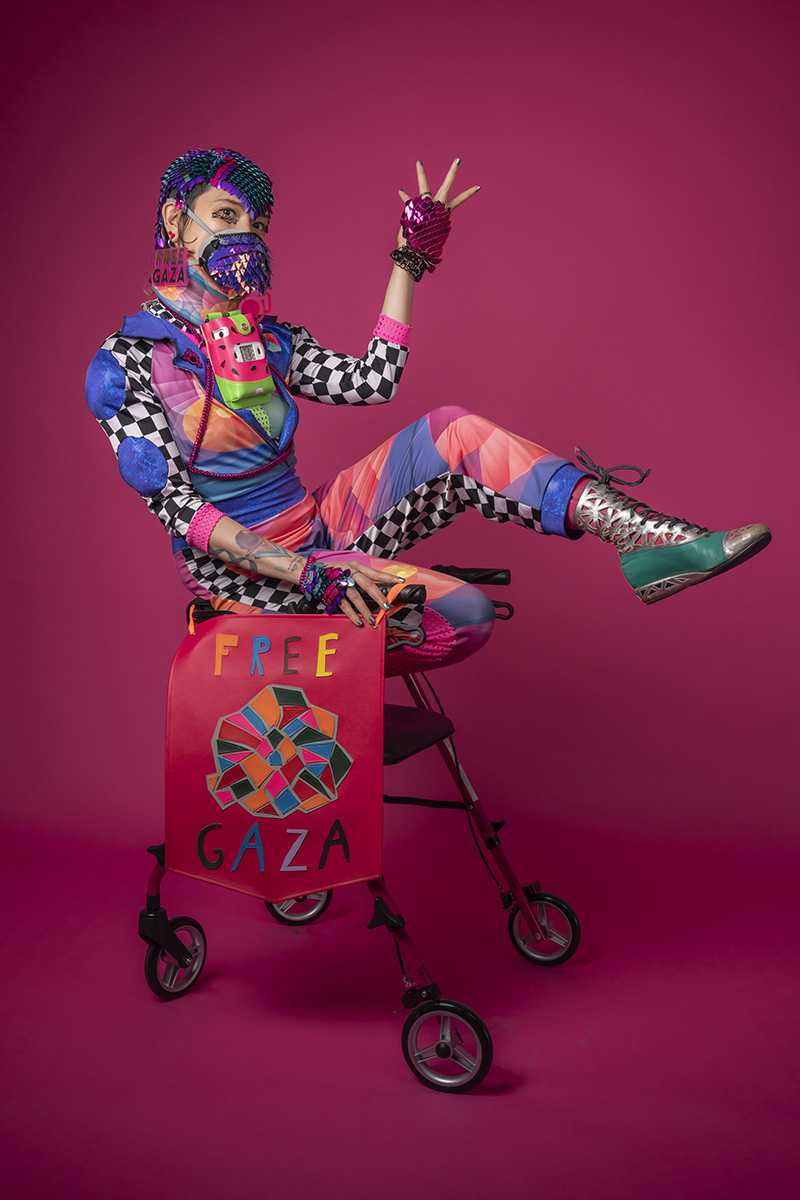
Sky Cubacub (they/them/xey/xem/xyr) is a non-binary xenogender and disabled Filipinx neuroqueer from Chicago, IL. As a multidisciplinary artist, Cubacub is interested in fulfilling the needs for disabled queer life, with an emphasis on joy. They are the creator of Rebirth Garments, a line of wearables for trans, queer and disabled people of all sizes and ages, and Radical Fit, a queer fashion series of programming in partnership with the Chicago Public Library. Cubacub is the editor of the Radical Visibility Zine, which celebrates disabled queer life, and are the Access Brat and editor of Just Femme and Dandy’s section about ethics and inclusion called “Cancel & Gretel.” They have had over 50 fashion performances and have lectured at the Whitney Museum of American Art, the Rhode Island School of Design, the University of Utah, the School of the Art Institute of Chicago, and Northwestern University. Rebirth Garments has been featured in Teen Vogue, Nylon, Playboy, Huffington Post, Buzzfeed, Vice, Wussy Mag, and The New York Times. Cubacub was named 2018 Chicagoan of the Year by the Chicago Tribune and is a 2019/2020 Kennedy Center Citizen Artist and a Disability Futures Fellow.
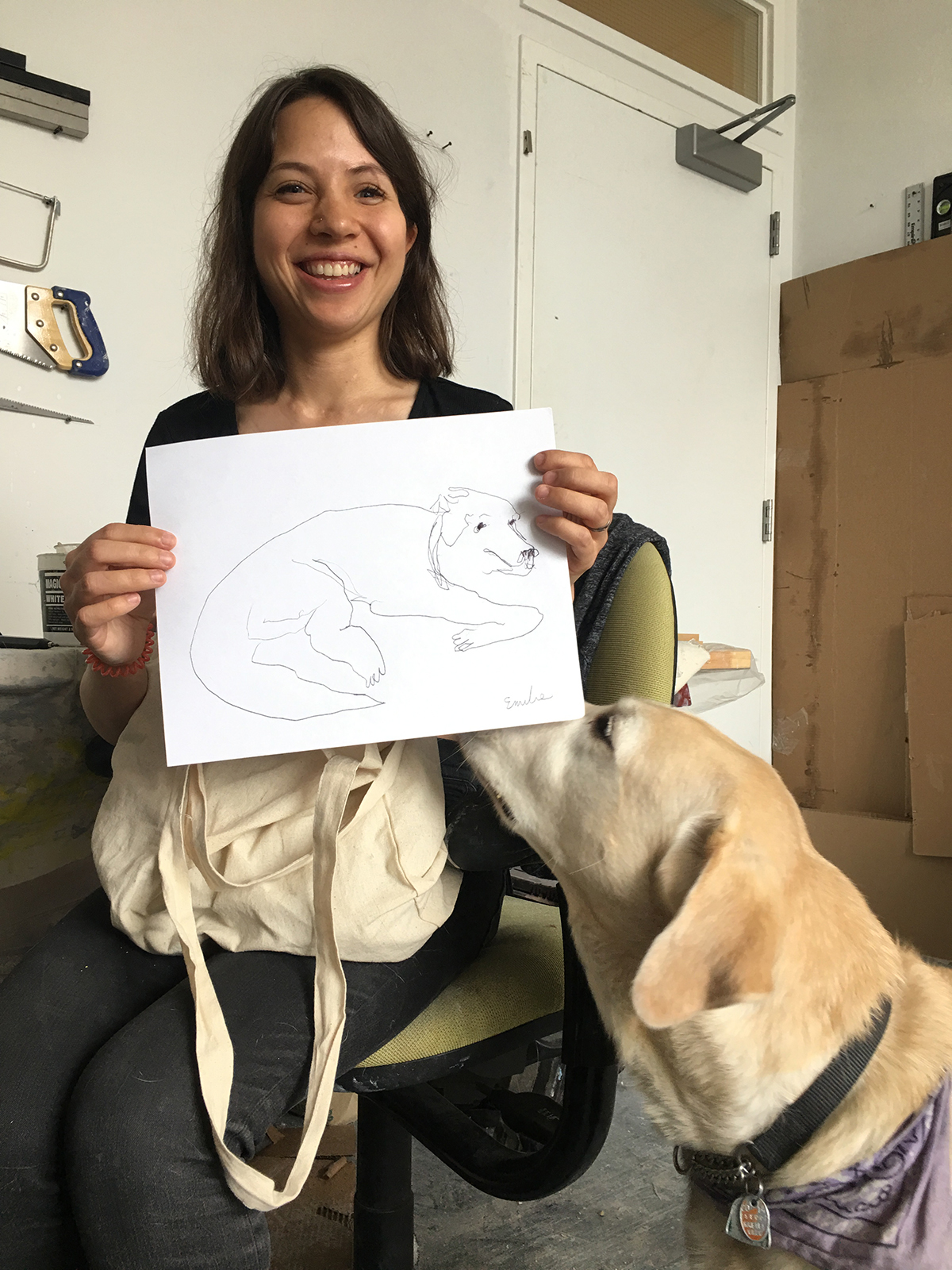
Emilie L. Gossiaux (she/her) received a BFA from The Cooper Union School of Art and an MFA from Yale School of Art. Since losing her vision due to a traffic accident in 2010, Gossiaux’s altered experiences have influenced her practice's trajectory—drawing inspiration from dreams, memories, and non-visual sensory perceptions. Her drawings and ceramics pertain to bodily autonomy, exploring themes such as love, intimacy, and the interdependent relationships between humans and non-human species. Much of her work is inspired by the interspecies bond she has with her Guide Dog, London, and celebrates disability pride. Simultaneously, she disrupts the Anthropocene understanding of agency and the hierarchic ordering between humans and animals. Solo shows include Significant Otherness and Memory of a Body, both at Mother Gallery, and After Image at False Flag Gallery. Gossiaux has also participated in group shows at the John Michael Kohler Art Center, the Aldrich Museum, Gallery 400, MoMA PS1, Museum für Moderne Kunst Frankfurt, and SculptureCenter. Awards include a John F. Kennedy Center VSA Prize, the Wynn Newhouse Award, the Colene Brown Art Prize, and The Queens Museum Jerome Foundation Fellowship. Her work has been featured in The Brooklyn Rail, The New Yorker, and Art in America.
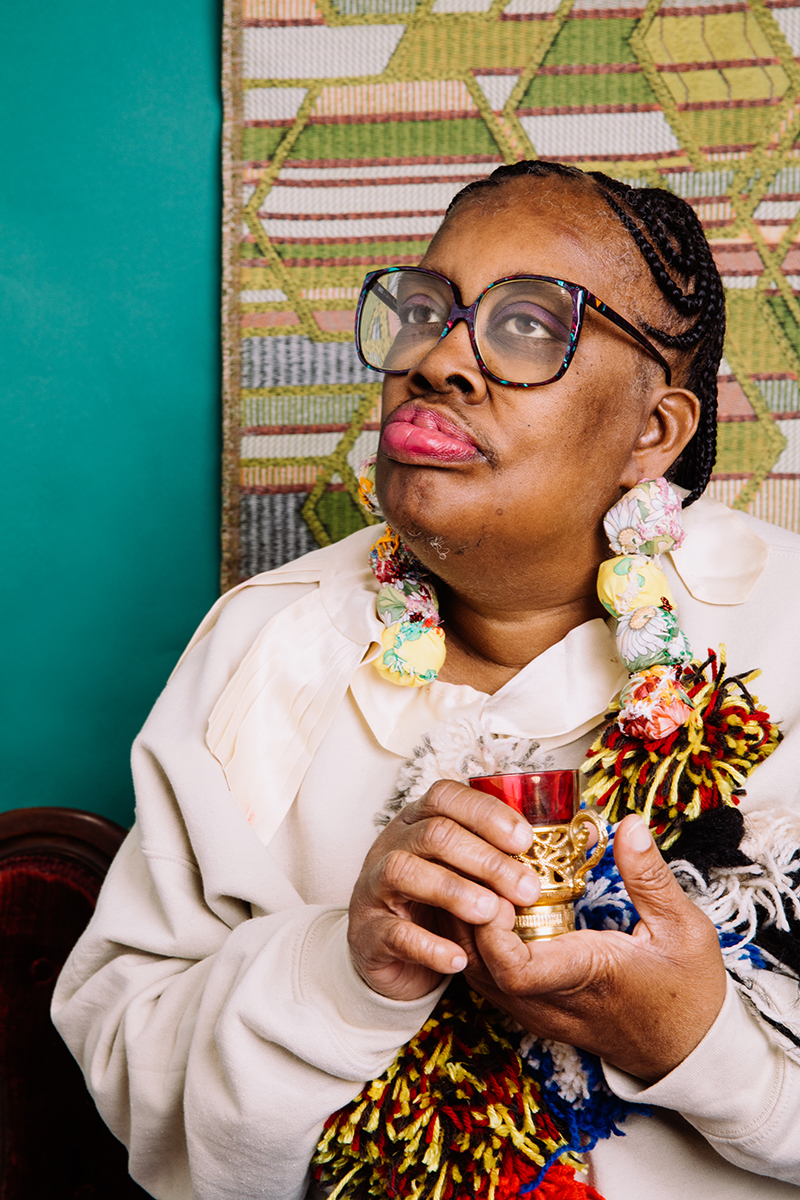
Felicia Griffin (she/her) is a prolific multimedia artist based in Richmond, California. She has been exhibiting work with Nurturing Independence Through Artistic Development (NIAD) Art Center since 1985.
The following is an edited excerpt from a conversation between Felicia Griffin and former NIAD art facilitator Lukaza Branfman-Verissimo. The complete interview can be found in Issue 6 of New Life Quarterly, published by E.M. Wolfman Books.
What would you like us to know about you? Who is Felecia Griffin?
Um, well, I like to…have fun and I love my friends and I want to do some more pompoms and I like doing my art.
What are you working on right now?
A pompom. I made two pillows and put pompoms on the pillows.
Why do you like to make art that involves circles? That’s a repeated shape in your pompoms, prints, and paintings — where does that circle shape come from?
The circle is inside of me, a square too. I see it in the world too.
You engage with a lot of people while you work—how does that relate to your art making?
Yep, I like doing it and um, I like to help out. It makes me feel happy! I started doing this: giving gifts. I am always looking out for who needs help.
Do you consider [other artists] your family?
YEEEAAAAS! I care for people — yes!
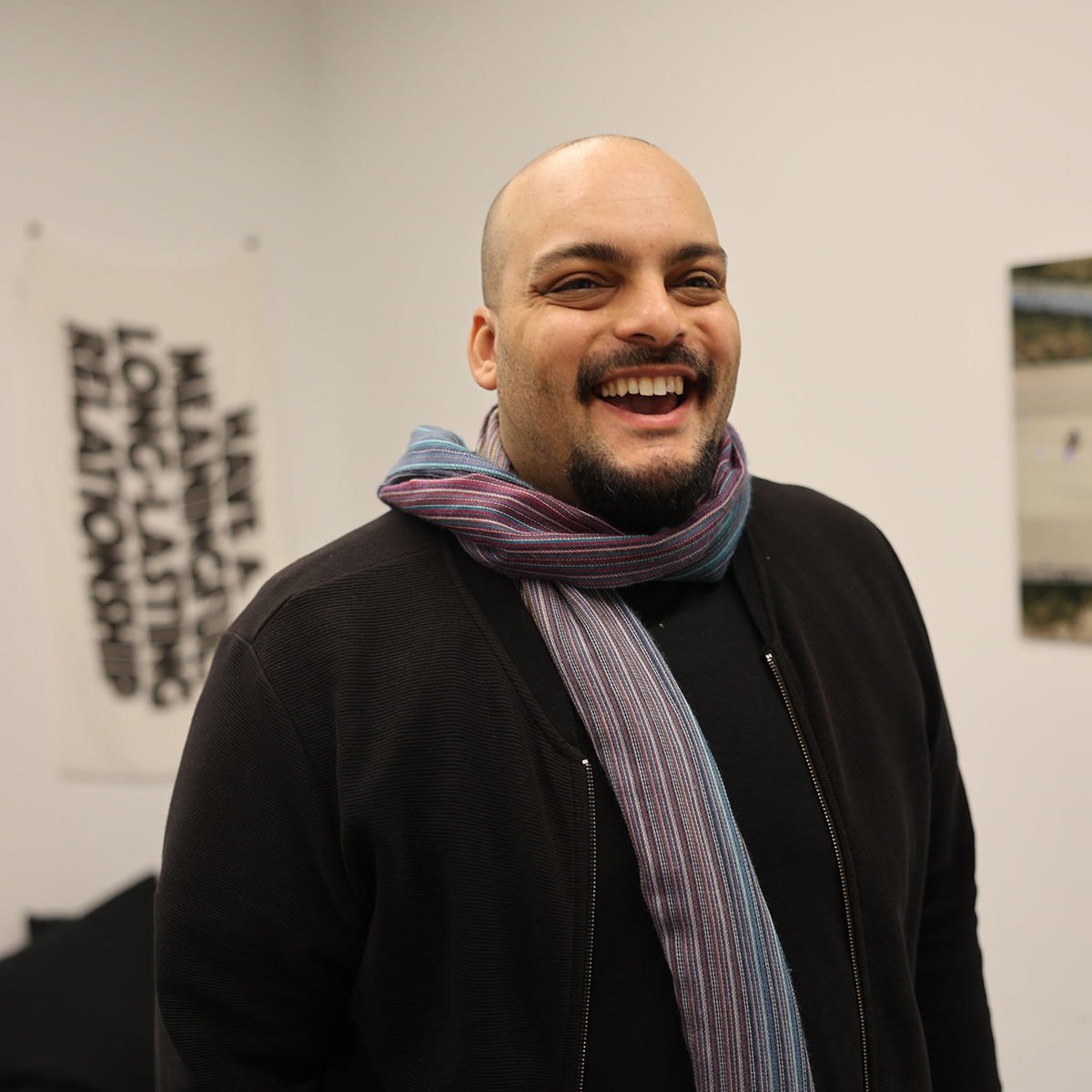
Jeff Kasper (he/him) is an artist, writer, and educator. He works with the tools and techniques of design, contemplative practices, and community engagement, to create public art, publications, open editions, workshops, and participatory learning projects. His artworks center dialogical, reflective, and instructional texts that often prompt meditation, relationship building, and serious play. Based on his own lived experiences and observations, much of his recent projects explore topics of support, safety, and proximity. Through his disability arts organizing, he opens up spaces for (re)imagining accessible and trauma-aware futures. His recent exhibitions have been presented internationally, including with New York City Department of Parks & Recreation, Meta Open Arts, and Queens Museum, and his past public programs have been facilitated with BRIC, CUE Art Foundation, and moCa Cleveland. Kasper is Assistant Professor at the University of Massachusetts Amherst in the Department of Art.
Joselia Rebekah Hughes (she/her) is a Mad and disabled Afro-Caribbean writer, artist, and educator based in the Bronx. She is a poetry editor at Apogee Journal. Hughes’s work hops in the lineage of Black disabled aesthetics and linguistics of access. She uses wordplay, oral traditions, and the archetype of The Fool as measures to question and provoke societal perceptions and values regarding chronic illness, Madness, neurodivergence, and disability. Her practicing mediums include video and photography, dance, literature, small sculpture, fiber work, drawing, zine-making, and drawing/painting. She's shared work at the Institute of Contemporary Art: VCU, Participant Inc., Lincoln Center, MoMA, Leslie Lohman Museum, Bard, Swarthmore, Whitney Museum of American Art, and elsewhere. Hughes’s poetry has been nominated for Best of Net and has been published in Apogee Journal, Massachusetts Review, The Poetry Project, Split This Rock, Blackflash Magazine, Leste Magazine, Jewish Currents, and Ocean State Review.